Category Creation in Biology
Why the next generation of fund-returners will be category kings, and why biology is where they're being built.

Written by Michael Luciani, Sarah Rodriguez, PhD, and Jennifer Kan, PhD
Over the past thirty years, roughly 6% of venture deals have generated about 60% of the asset class’s returns. This is the power law that defines venture capital, and the conversation around it is well-worn. What gets discussed less is what those 6% of deals tend to be.
Most of them are what we call category creators.
Anyone who has read Play Bigger has seen the underlying data: across a large sample set of venture-backed companies since 2000, the category leader, what the Play Bigger team calls the “category king”, captures around 76% of the total market capitalization of the category it defines. Everyone else splits what’s left.
Taken collectively, these two findings suggest that the investments that return venture funds are usually made in companies that define the categories in which they sit.
Pattern recognition
Look at the canonical examples of breakout companies from the last twenty-five years. None of them won on price. None of them won by being marginally better. Each one defined a new unit of work in its category at the moment the underlying technology made that unit economically viable.
Salesforce defined SaaS when broadband and the browser made it credible to deliver enterprise software over the cloud instead of on a CD.
Stripe defined modern payments infrastructure when accepting payments online became something a developer could turn on in a few lines of code, rather than a multi-month negotiation with a bank.
Uber defined ride-sharing when GPS in every pocket made it possible to match a driver to a rider in real time.
Illumina put sequencing on a flow cell and made access to genomic data fast and inexpensive. Scientists had previously deciphered one gene at a time.
Twist put DNA synthesis on silicon chips and made it routine to design and order whole genes. Labs had previously stitched together short fragments by hand.
The pattern is consistent. As a cost curve bends, a new unit of work becomes economical, and whoever defines the category around that unit captures most of the eventual market cap.
Why biology is next
As the raw cost of engineering biology has dropped roughly five orders of magnitude over the past twenty years, four shifts are compounding:
Read, write, edit DNA. The cost of sequencing has fallen from ~$3 billion for the first human genome to a few hundred dollars today, and is still falling. The cost to synthesize and edit DNA has followed a similar trajectory.
Equipment as a service. Third-party providers have made fractional access to lab infrastructure routine. A pre-seed company can create minimum viable products (MVPs) without owning any equipment at all.
Robotics and automation. Lab robots are cheaper than the labor they replace. They are more precise, scalable, and run 24/7.
AI. Biological experiments used to happen at the bench: they are slow, manual, and expensive. Increasingly they happen in silico. AlphaFold collapsed protein structure prediction from a multi-year crystallography project to an afternoon of compute. Strain design teams that once cycled through hundreds of physical variants now screen millions in simulation and only build the top candidates. This is just the tip of the iceberg of what AI can do for biology.
As a small founding team raising under a million dollars today can do what required fifty million and five years a decade ago, many more ideas now justify a venture-backed company than did a decade ago.
It starts out looking like a toy
In 2010, Chris Dixon wrote a short essay called “The next big thing will start out looking like a toy.” It’s only a few hundred words long, and it has aged well.
Dixon’s argument, building on Clay Christensen, is that disruptive technologies get dismissed as toys because, at launch, they “undershoot” what users need. The first telephone could only carry voices a mile or two. Western Union passed on acquiring it because they couldn’t see how it would help the railroads, their primary customer. The same dismissal happened to the PC, to digital cameras, to Skype.
The non-obvious part of Dixon’s argument is why some toys become disruptive and others stay toys. His answer: it depends on whether the product is designed to ride an external cost curve. Microchips are getting cheaper. Bandwidth is becoming ubiquitous. Mobile devices are getting smarter. The toys that catch one of those curves get carried up by it. The ones that don’t, don’t.
That’s what we think is happening in biology right now. The cost curves underneath engineering biology have fallen far enough, and are still falling, that founders are now building what look, today, like toys. Microbes that grow textiles. Lettuce that produces GLP-1s. Dogs with sensors in their noses. Proteins that pick rare-earth metals out of e-waste. Trees engineered to grow faster and sequester more carbon. Bringing back a woolly mammoth.
Each of these is easy to dismiss in 2026. So was online payments in 2010.
What we’ve backed
At Juniper, our portfolio is built around this thesis. Among the first checks we’ve written:
Colossal, the de-extinction company restoring the woolly mammoth and the thylacine using state-of-the-art biological tools.
Cache DNA, storing DNA and other biomolecules at room temperature and removing the cold chain from genomics.
Modern Synthesis, growing textiles from microbial cellulose for fashion and footwear.
Alta Resource Technologies, using engineered proteins to selectively recover critical minerals from e-waste and ore.
Evolv, engineering biology to manufacture high-value functional molecules, starting with GLP-1 oral peptides.
General Sense, digitalizing the sense of smell for a safer world.
None of these companies are trying to be a marginally cheaper version of an incumbent. Each one is defining a category that didn’t exist before. Not all of them will get it right, but some will become the category king.
The thesis
We believe category creation is the most under-appreciated source of venture-scale return in biotech. The cost curves underneath engineering biology have fallen far enough that the experiments founders can credibly run have outpaced the categories that exist to absorb them. New categories will get defined. The companies that define them will capture the majority of the value.
Juniper writes the first checks into category-creating companies enabled by breakthroughs in biology, engineering, and computation. If you’re building one, especially if it currently looks like a toy with the potential to re-imagine an entire category, we’d like to hear from you.
Community Updates
Shout-Outs!
Over the last month, we’ve received 20 new founder referrals from 12 Scouts. Big shout out to Janina Motter and Erin Huiting as our top referrers of the month. Thank you also to Rachel Shapiro, Nelli Morgulchik, Alison Hirukawa, Tuzun Guvener, Benjamin Wong, Judy Su and David Kim and to our repeat referrers Sapyr Sebaoun, Stephen Sameroff and Barak Dror. We look forward to getting to know the founders and companies you shared with us.
Juniper at SynBioBeta in San Jose
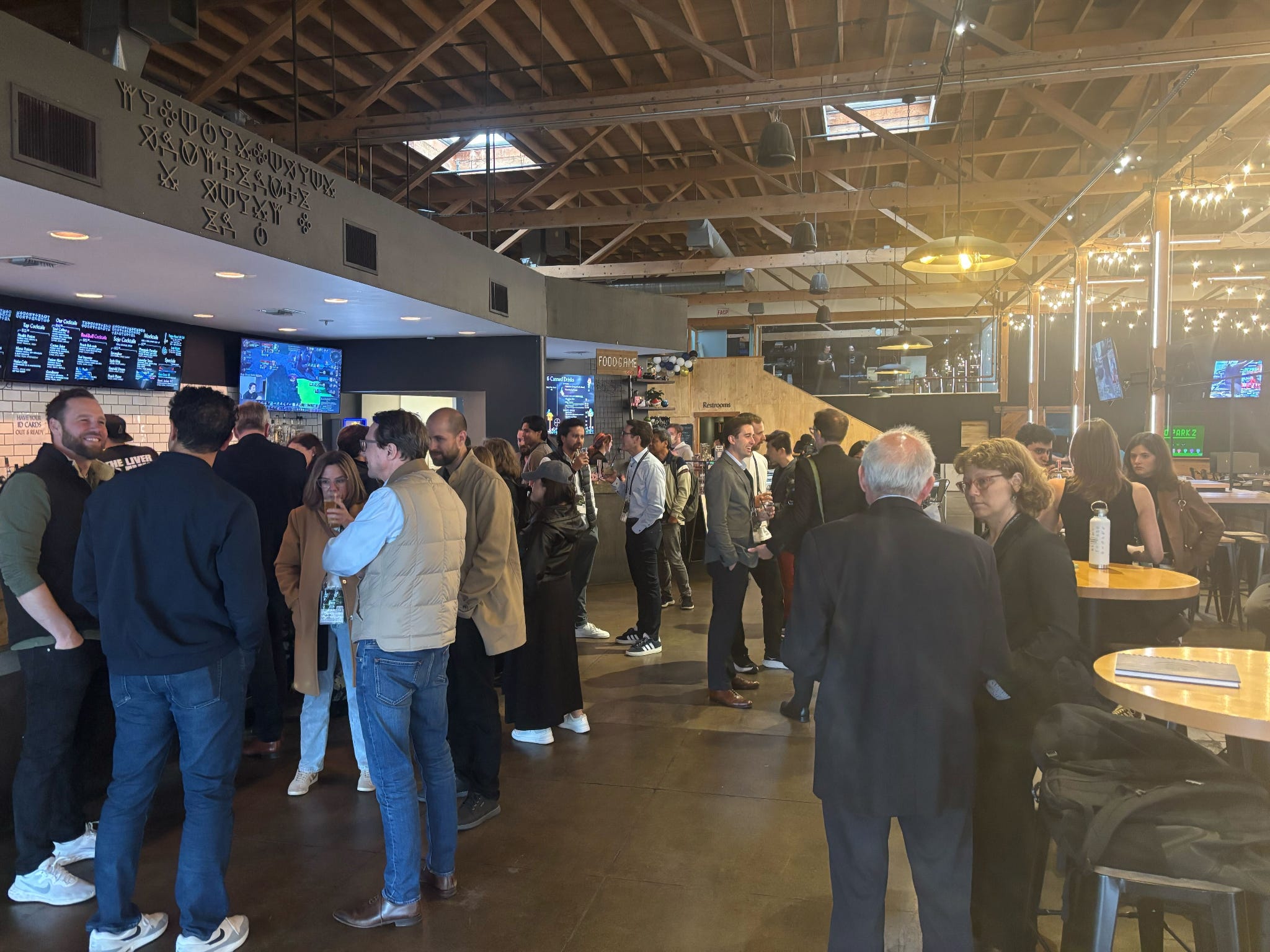
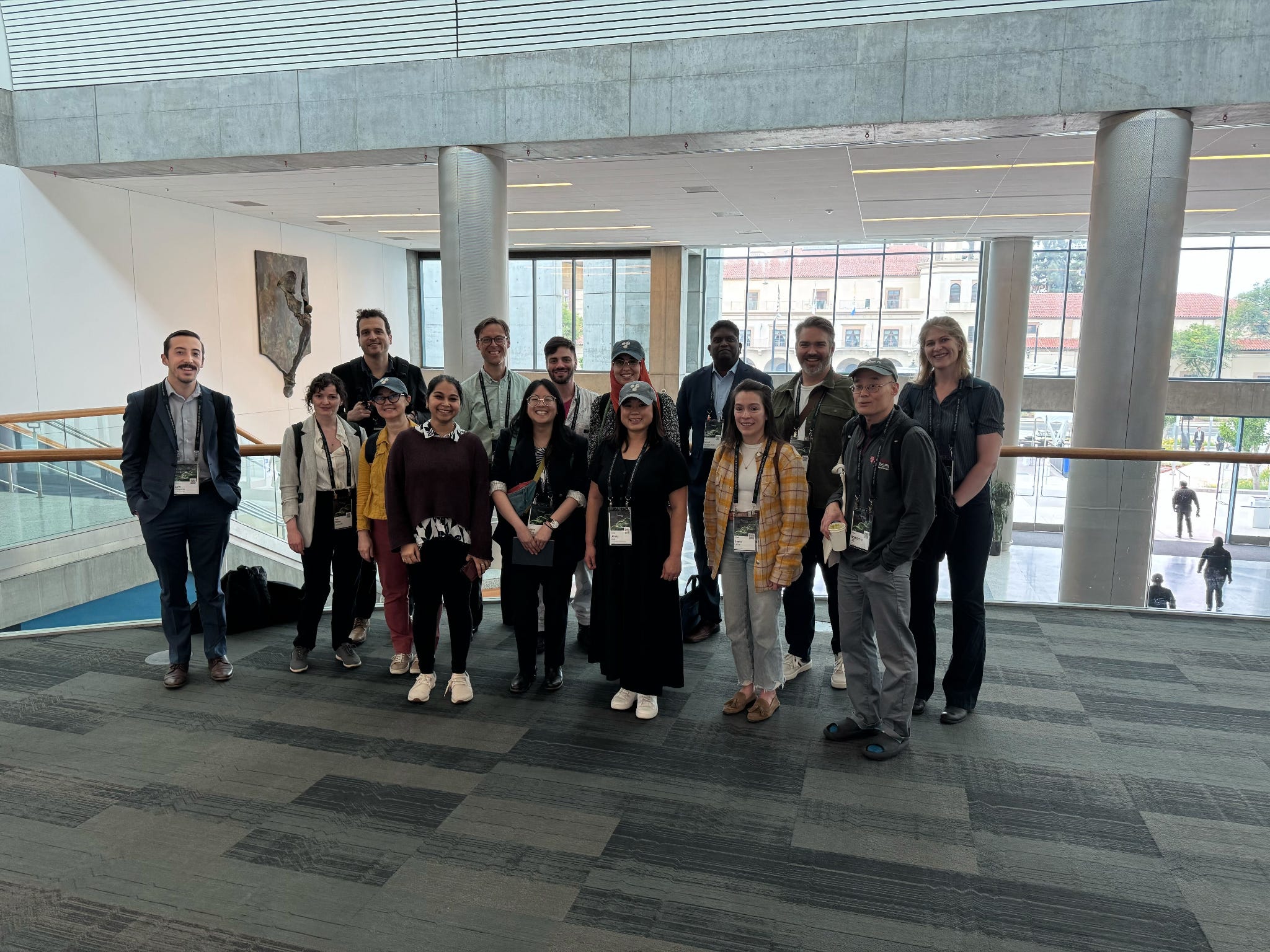
We were out in force at SynBioBeta this month, co-hosting a bioindustrial happy hour with Forbion and the BioInnovation Institute, and meeting up with Juniper Scouts at a special hangout!
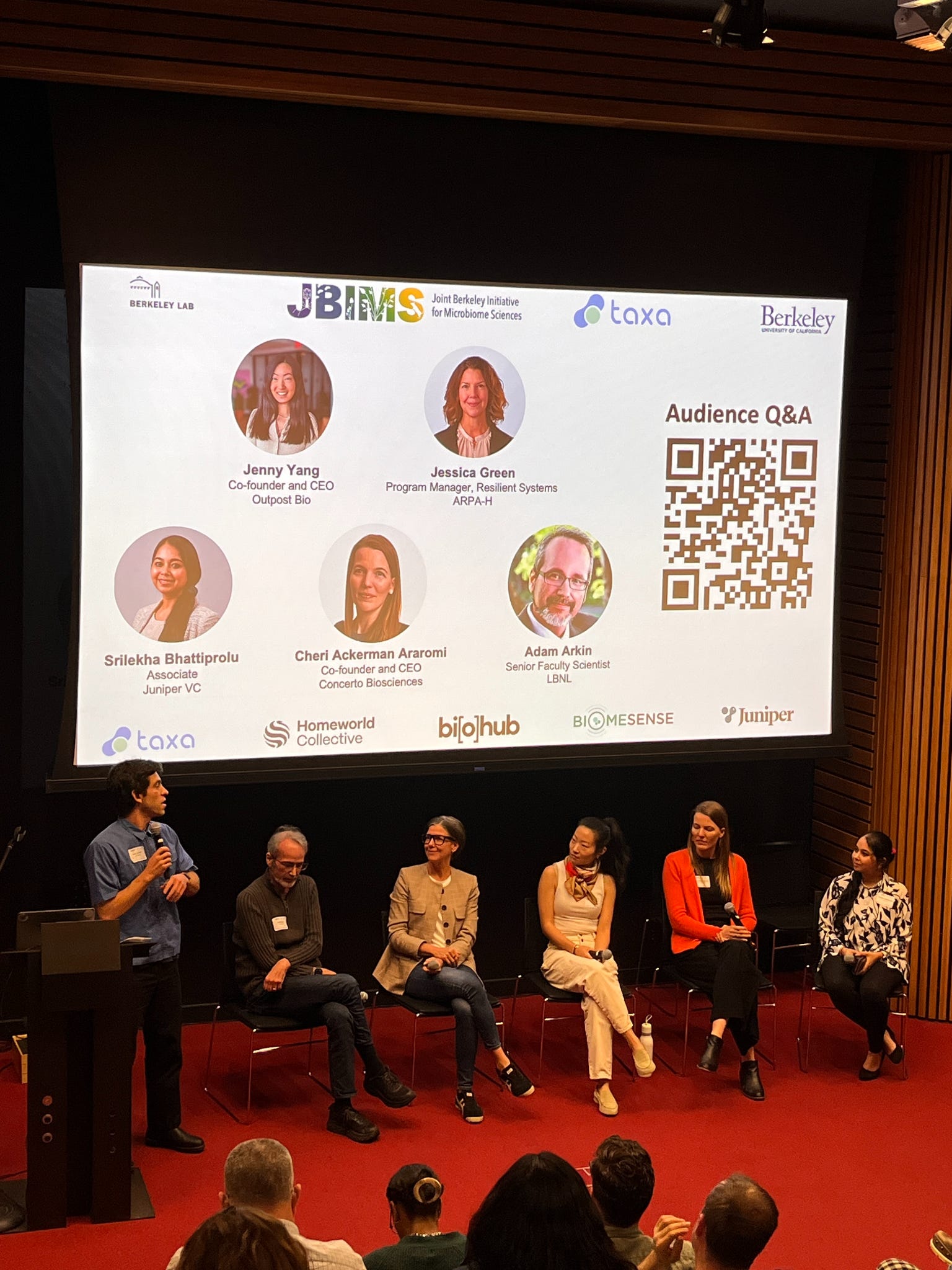
Juniper Sponsored JBIMS Panel at Berkeley
This month marked our first Scout-sponsored event: the JBIMS Microbiome Innovation Forum 2026 - AI × Microbiome Innovation at Berkeley, with 198 attendees from 10+ academic institutions and 65+ companies and non-profits. Thank you to our Scout Asa Conover for organizing this event on behalf of JBIMS!
We are pleased to have Srilekha on our team joining a panel alongside Cheri Ackerman Araromi (Concerto Biosciences), Jenny Yang (Outpost Bio), Adam Arkin (LBNL / UC Berkeley), and Jessica Green (ARPA-H) to discuss how microbiome technologies can achieve economic viability at scale.