
Written by Sarah Rodriguez, Michael Luciani, and Jennifer Kan, PhD
Juniper writes first checks into category creators made possible by engineering biology. What does that mean in practice? Most physical things are still made the incumbent way: from petrochemicals, with high heat and strong acids, or by extraction from plants and animals.
Engineered biology offers another path. It is selective where chemistry is not, it runs at mild conditions, and it can start from cheap feedstocks, including waste. McKinsey estimates that up to 60% of the physical inputs to the global economy could be made this way. Sometimes biology makes existing products cheaper and faster. Sometimes it makes products no existing method can. The companies that get there first define new categories, and that is where we invest.
McKinsey projects $2 to $4 trillion in direct annual economic impact from biology over the next 10 to 20 years, drawn from roughly 400 applications already visible today. Human health accounts for only 35% of that. The other 65 percent sits outside healthcare, where products reach the market without a decade of clinical trials. That is the opportunity Juniper focuses on, where companies reach revenue on a venture timeline rather than a pharmaceutical one.
We focus on seven markets:
Critical Minerals & Resource Recovery
Consumer Bioproducts
Next-Generation Materials
Food & Agriculture
Molecules & Fuels
Tools & Infrastructure
Emerging Frontiers
In each, biology is changing what can be made and creating new categories of product and value. Below we break down each market: the category creation opportunity, who the incumbent is, where biology wins, and companies we have backed that shows how. After the map, we make the case for why these markets matter to investors: they produce exits, deal activity is rising, and early entry still buys real ownership.
1. Critical Minerals & Resource Recovery
Biology opens an entirely new source of critical metals. Biological separation and recovery turns e-waste, tailings, and low-grade ore, material the mining industry writes off, into a domestic supply of rare earths, copper, nickel, and battery metals at a moment when every major economy is trying to secure one.
The incumbent is hydrometallurgy and smelting: crush the ore, leach it in strong acid or melt it at high temperature, then separate the target metal from everything else. Separation is the hard part. Rare earths are chemically so similar that solvent extraction may require hundreds of stages to reach high purity, with a large footprint, high capital cost, and large volumes of liquid waste. The same economics strand metal in low-grade ore and tailings, where concentrations are too thin to justify the energy and reagents.
Biology’s edge is selectivity in mild conditions. Proteins have evolved to bind specific metals tightly and ignore the rest. A natural rare-earth-binding protein can purify rare earths as a group from mixtures too complex for traditional extraction methods, in water rather than organic solvent. Microbes, meanwhile, already leach metals from ore at ambient temperature, and can be steered.
Alta Resource Technologies engineers proteins that selectively bind and separate critical minerals and rare earths, starting with e-waste and domestic mining feedstocks. Transition Metal Solutions works the ore side: it designs additives that boost the wild microbial communities already present in copper heaps, raising recovery from material that conventional processing leaves behind.
2. Consumer Bioproducts
Consumer markets reward speed. Trends move in months, while bringing a single bioproduct to market has historically taken years of research and development and millions of dollars, so biology usually arrived after the trend had moved on.
That gap is closing now, just as demand opens up. The FDA is phasing out petroleum-based food dyes by the end of 2026 and fast-tracking natural replacements. “GLP-1 companion” has become the fastest-growing claim in supplements. Healthy aging supplements are growing at double digits, as consumers shift from living longer to staying healthy longer. And nearly 4 in 5 US adults take a supplement, increasingly in food rather than a pill.
AI-guided biological design, automated labs, and food-safe hosts that skip purification now move fast enough for biology to launch into these trends while they are still rising. The category this opens is functional bioproducts built at the speed of consumer demand.
Speed is half the problem. The other half is cost. Incumbent consumer ingredients come from two places: chemical synthesis, often from petroleum, or extraction from plants and animals, which ties supply to harvests, geography, limited productivity, and price swings. The first wave of bio-industrial companies tried to replace both with conventional fermentation, but recovering one molecule from a complex broth is expensive, as purification can account for up to 80 percent of total production cost.
Biology improves the economics in two ways. The first is a better molecule, made by enzymes, microbes, or plant cells that deliver a consistent supply free of the crop cycle and its productivity limits. The second is more radical. A product biomanufactured and used in whole form, without purification, removes the largest cost line. A food-safe production host makes that possible, because the biomass itself is the product.
The path to revenue is short as well. Products sell under food and supplement frameworks rather than drug approval, so no multiyear clinical trials stand between a working product and a paying customer. This is the shortest route from lab to revenue on our map.
Evolv brings all of this together. Its engineered yeast strain produces a molecule that delivers the effect of GLP-1, meeting one of the fastest-growing demands in supplements, and the product ships as a whole yeast powder rather than an isolated peptide. Evolv has opened the category of whole-food consumer nutraceuticals.
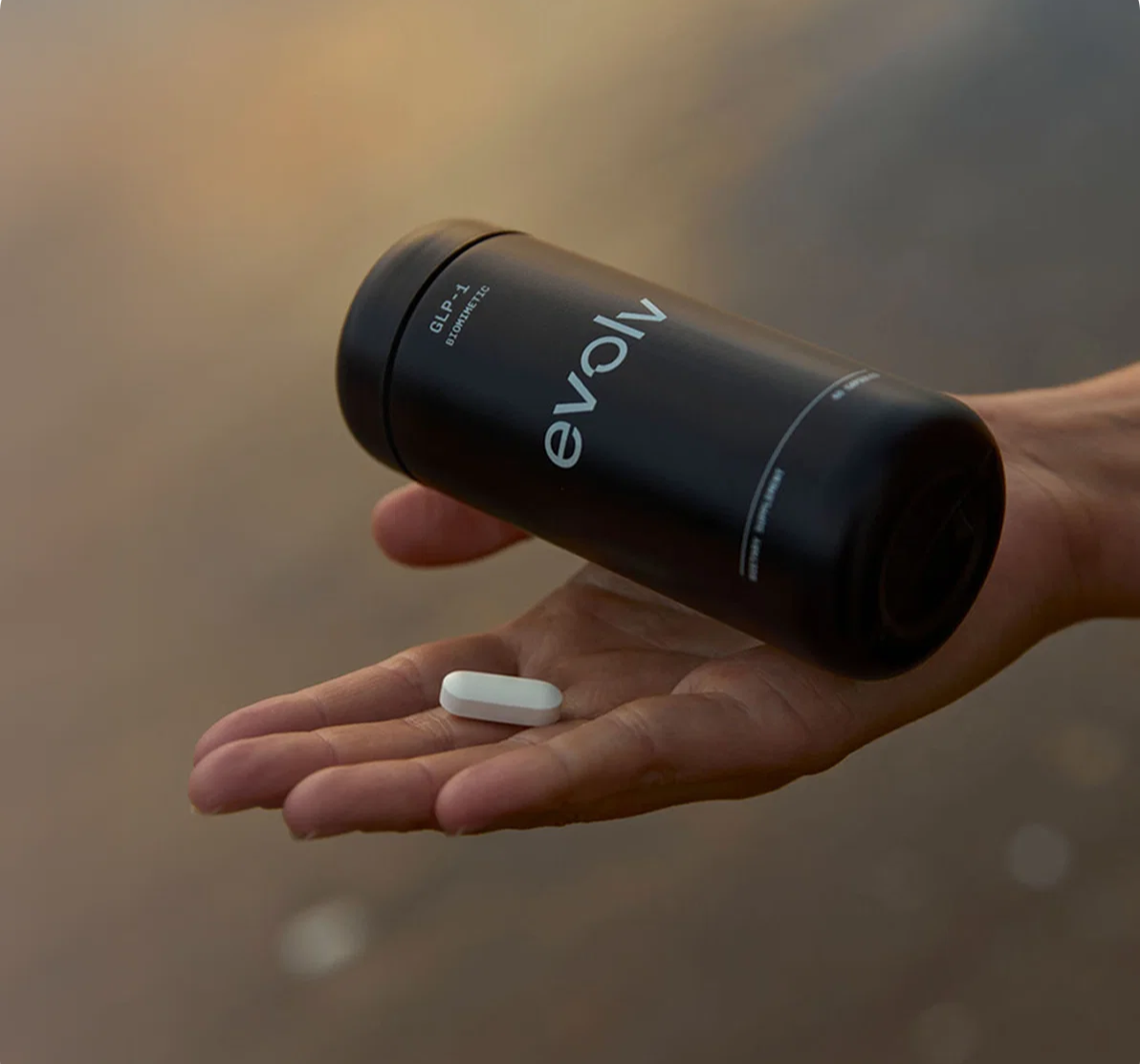
Evolv’s biomimetic peptide supplement - using Saccharomyces cerevisiae (yeast) as a biological host, engineered to naturally activate the body’s GLP-1 pathway..
3. Next-Generation Materials
Biology can create functional materials chemistry never could. This category is polymers, adhesives, textiles, packaging, and construction materials designed biologically from the start, with performance petrochemical versions cannot reach and end of life built in, rather than bio-based copies that inherit the same toxicity and recycling problems.
The incumbent is built on oil, heat, and concentrated supply chains. Polyester makes up 59 percent of global fiber production, most of it from petroleum and roughly two-thirds of it made in China. Polyurethane, found in shoes, insulation, adhesives, and car parts, depends on isocyanates, toxic building blocks whose top five producers hold over 80 percent of global capacity. And most materials are used once: only 9 percent of plastic waste is ultimately recycled.
Biology wins at four points in a material’s life. It can make the molecule: engineered microbes and enzymes produce building blocks that are hard or hazardous to make synthetically, from protein fibers to monomers with new heat, barrier, or degradation properties. It can grow the material: fungi grow foams and leather-like sheets into shape from agricultural waste, and bacteria bind aggregate into masonry at ambient temperature, with no kiln. It can finish the material: engineered microbes produce and fix dye onto fabric, cutting the water and heat of conventional dye houses. And it can close the loop: engineered enzymes break PET back into its monomers, so recycled plastic can match virgin quality instead of degrading with each cycle.
The common thread is that each wins on something incumbents cannot offer: a property, a process, or an end of life. The first wave of bio-based materials mostly competed on price as copies of commodities, and many struggled. The new wave wins through category creation.
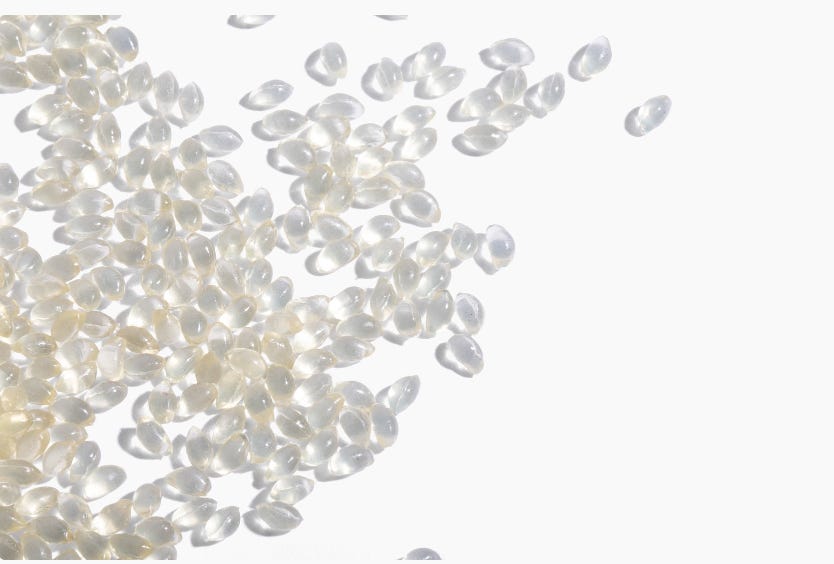
One example is Matereal. Its Polaris platform is a non-isocyanate polyurethane made from renewable resources, recycled monomers, and captured carbon, designed to run on conventional manufacturing equipment. Its technology can fix carbon dioxide into up to 30 percent of the finished product’s weight. Footwear, apparel, and outdoor gear are the first markets.
The rest of our materials portfolio shows the breadth of what biology can make. Rubi Laboratories turns captured CO2 into cellulose for carbon-negative textiles. Modern Synthesis grows textiles with bacteria instead of spinning them from petrochemicals. Cambrium and Tandem Repeat design proteins as materials: Cambrium’s first product is a collagen made by precision fermentation, and Tandem Repeat builds programmable protein materials for textiles. Materia Bioworks speeds up the whole process, using a full set of AI-first computational tools to help brands launch products from biomaterials 10x faster.
Matereal’s Polaris - novel non-isocyanate thermoplastic elastomers and adhesives made from renewable, bio-based feedstocks.
4. Food & Agriculture
Predictive trait design is a new layer in a food system worth trillions. Gene editing made crop changes fast and cheap, and the category now forming is knowing which change to make, moving yield and resilience out of the spray tank and into the genetics. A second category goes further: growing the valuable part of a crop in a bioreactor, with no farm at all.
The incumbent is conventional breeding paired with synthetic fertilizer and crop protection, an input market worth hundreds of billions of dollars. Conventional breeding often takes more than 10 years to develop a new trait. Gene editing can shorten that to a few years or less, and regulators are adjusting: in several major markets, review of gene-edited products takes months where transgenic crops take years. The bottleneck has shifted from making an edit to knowing which edit to make.
Living Models is built for that problem. It trains foundation models on plant multi-omics data so seed and ag tech companies can find the changes that improve resilience and yield and reduce chemical inputs. Faster editing makes every good prediction more valuable. GigaCrop works deeper in the plant, rewiring photosynthesis to get around Rubisco, the enzyme that limits crop productivity.
Plant cell culture takes the second route. Cells from an elite plant grow in bioreactors, much like fermentation, and are ready to harvest in days rather than seasons. That matters most for high-value crops tied to weather and geography, like cocoa, whose prices recently hit record highs. California Cultured grows cocoa this way. It has self-affirmed GRAS status for its cocoa powder, and Meiji, Japan’s largest chocolate company, has signed a 10-year agreement to source it.
5. Molecules & Fuels
Biomanufacturing is rewriting the cost structure and logistics of the chemical industry. This category makes fuels, commodity chemicals, and specialty chemicals from cheap, overlooked inputs, in fewer steps, at mild conditions, and close to where those inputs are found.
The incumbent is the petrochemical value chain: a small number of very large complexes, sited near oil and gas and linked to customers by long shipping routes. That scale keeps unit costs low but makes the supply chain brittle, since one outage or blocked shipping lane stalls everyone downstream. The chemistry is also inefficient. Bulk chemicals generate up to 5 kilograms of waste per kilogram of product, and fine chemicals 5 to 50, much of it from reagents that are consumed and thrown away at each step, along with high heat, high pressure, and hazardous solvents.
Biology has three advantages here. The first is selectivity. An enzyme can make one bond on one molecule at near-ambient conditions, accomplishing in a single step what conventional chemistry does through multistep synthesis, with purification at each step. The second is feedstock. A selective process at mild conditions can turn waste streams, residues, and low-grade sources into viable inputs. The third is location. Bioprocesses that skip the heat and pressure can be built smaller and placed next to the feedstock, whether that is a farm region, a forest, a landfill, or a military base. A network of smaller plants keeps running when any one of them fails, and it can make fuel and chemicals in places that are hard to supply at all.
Erg Bio is our category creator here. Its low-temperature process turns agricultural, forestry, and municipal waste into fermentable sugars for fuels and chemicals, so a plant can run on whatever waste is local. It is backed by the U.S. Department of Defense and Department of Energy to build domestic, waste-based fuel and chemical capacity. Aralez Bio shows the selectivity advantage at the fine chemical end: it makes noncanonical amino acids in a single enzymatic step with full enantiopurity, replacing multistep chemical routes.
6. Tools & Infrastructure
Engineered biology is becoming a platform industry. The tools underneath it, from autonomous labs to AI design to cheaper scale-up, are what turn new science into new industries. The category spans synthesis and sequencing of nucleic acids and proteins, bioengineering tools such as genome editing and cell-free synthesis, robotics and physical AI, AI models and software, and advanced fermenters.
The incumbent is how work gets done today: scientists running experiments by hand, data scattered across spreadsheets and notebooks, and scale-up in capital-heavy stainless steel fermenters built for pharmaceuticals. Each step is slow, labor-bound, expensive, and hard to reproduce. The opportunity is to turn biology from a craft into an engineering discipline that scales. Tools companies can sell into every category at once, so they grow with the whole bioeconomy.
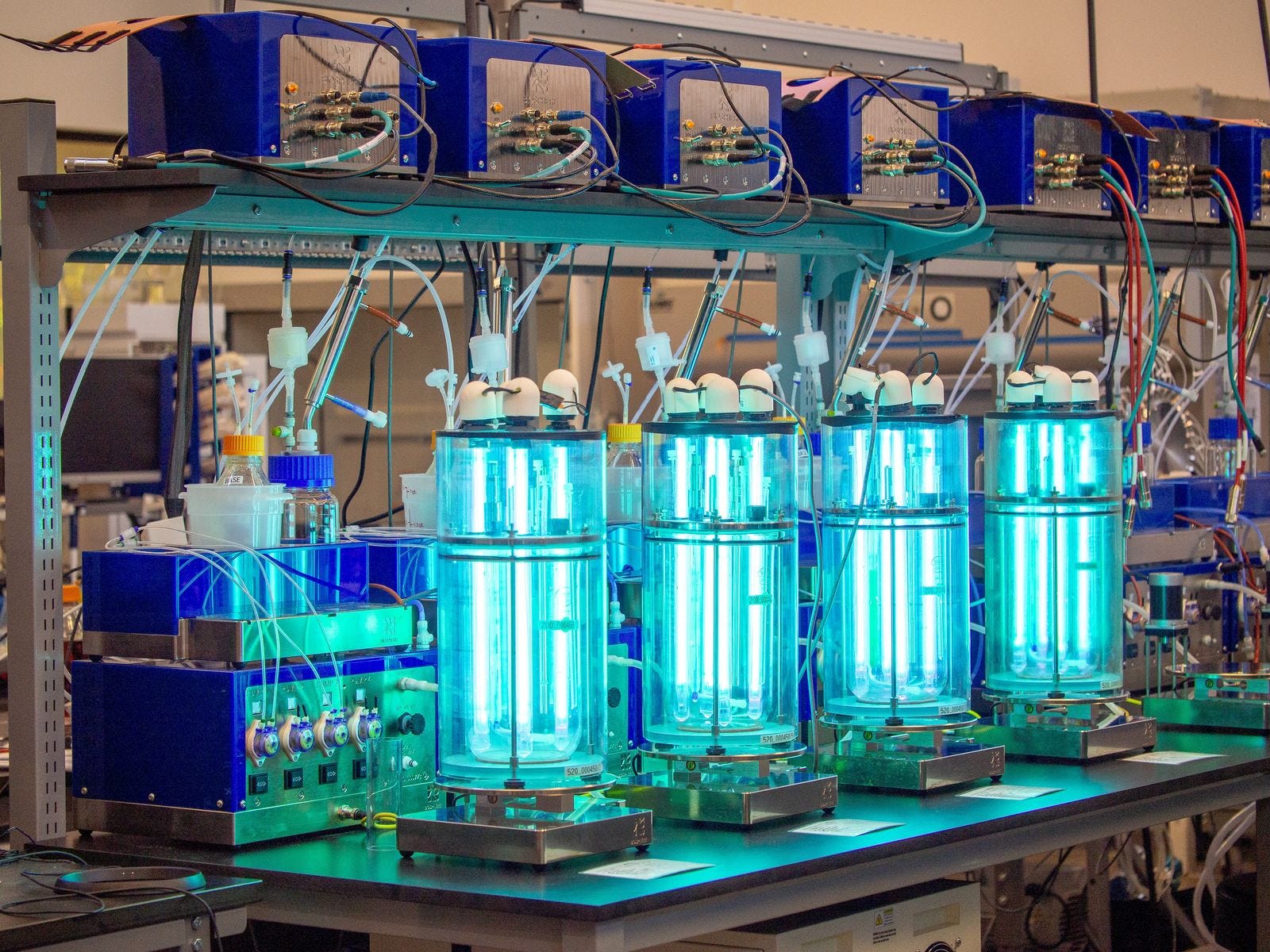
Trilobio builds modular, self-driving labs that run experiments around the clock. Provolut designs proteins and enzymes with AI, and Genyro turns DNA sequences into programmable systems. Biosphere replaces the stainless steel fermenter: its bioreactors sterilize with UV light instead of steam, so they can be built from cheaper materials and deployed almost anywhere.
Biosphere’s bioreactors radically expand the design space for biomanufacturing.
7. Emerging Frontiers
In any new technology wave, as cost curves decline, entrepreneurs create new units of value that don’t fit into existing categories. Emerging frontiers such as de-extinction, synthetic genomes, biocomputing, space biotech, and bio-machine interfaces are markets that have not yet been priced and are taking shape around the first companies that build them. One success can return a venture fund.
General Sense works at the interface of biology and machines. Spun out of a DARPA-funded project, it decodes the neural signals of biological smell to capture chemical data at sensitivities no man-made instrument can match, and is building that into a sensory reasoning layer for AI. Cache DNA stores DNA and other biomolecules at room temperature without a cold chain, which opens the door to DNA as a durable medium for storing data.
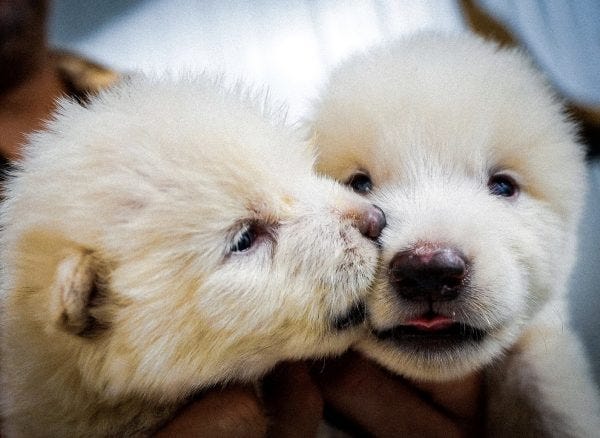
Colossal shows how quickly a frontier company can take off. Its public mission is de-extinction, but the business is an engineering biology tech stack that has already produced spinouts, including computational biology company Form Bio, plastic degradation company Breaking, and biological intelligence company Astromech, now valued at $3.8 billion.
We wrote our first check into Colossal at seed in 2021. The company raised a $200 million Series C from TWG Global at a $10.2 billion valuation in January 2025, and in July 2026 Axios reported it was in talks to raise at a valuation of $20 billion to $30 billion.
One of Colossal’s dire wolves, born in 2024 from edited cells.
Why we invest in these markets
First, they produce exits. Since 2021, the deals below alone total nearly $30 billion. In agriculture, strategic acquirers are buying biology directly: Corteva paid $1.2 billion for Stoller and $370 million for Symborg in 2023, Syngenta bought the start-up Intrinsyx Bio in 2024, and BASF closed its acquisition of AgBiTech in March 2026.
The largest players are also consolidating around biology, which means well-capitalized buyers for what our companies build. International Flavors & Fragrances closed its $26.2 billion merger with DuPont’s Nutrition & Biosciences division in February 2021. Novozymes and Chr. Hansen merged in January 2024 to form Novonesis, which in June 2025 paid €1.5 billion to buy out dsm-firmenich’s stake in their animal feed enzyme partnership.
Second, deal activity is rising. Across life science tools, DealForma counted 154 transactions in diagnostics, sequencing, omics, and tools in 2025, up from 113 the year before, and 203 in manufacturing technology, up from 144. KPMG’s separate count points the same way, recording 132 life science tools and diagnostics transactions in the first nine months of 2024, with volume up year over year. Buyers for the tools that make biology work are active and growing.
Third, early entry in these categories makes returning the fund realistic. A seed round in AI now often prices between $25 and $45 million post-money, so a $1 million check buys about 2.5 percent of a $40 million company. In our markets, the same check at a $12 million post-money buys about 8 percent, more than three times as much. For a $50 million fund, that is the difference between needing a $2 billion exit to return the fund and needing one near $600 million (before dilution), a size acquisitions like Stoller have cleared. Access is narrowing as well. Four AI companies took close to 65 percent of all venture dollars in the first quarter of 2026, and small funds are increasingly priced out of the rounds most likely to produce the largest outcomes. In Juniper’s markets, specialist knowledge decides who sees the deal early.
AI is rewriting the digital economy. The physical economy still runs on atoms, and biology is the technology rewriting it. The market is large, its exits are proven, and it is still largely uncontested. It is the market we intend to own.
If you are building a category creator with engineering biology, we want to hear from you.
Community Updates
We’ve received 5 new deals referred by 4 Scouts - big thank you to Maya Benami, Stephen Sameroff, Carl Ebeling and Néstor Sampedro.
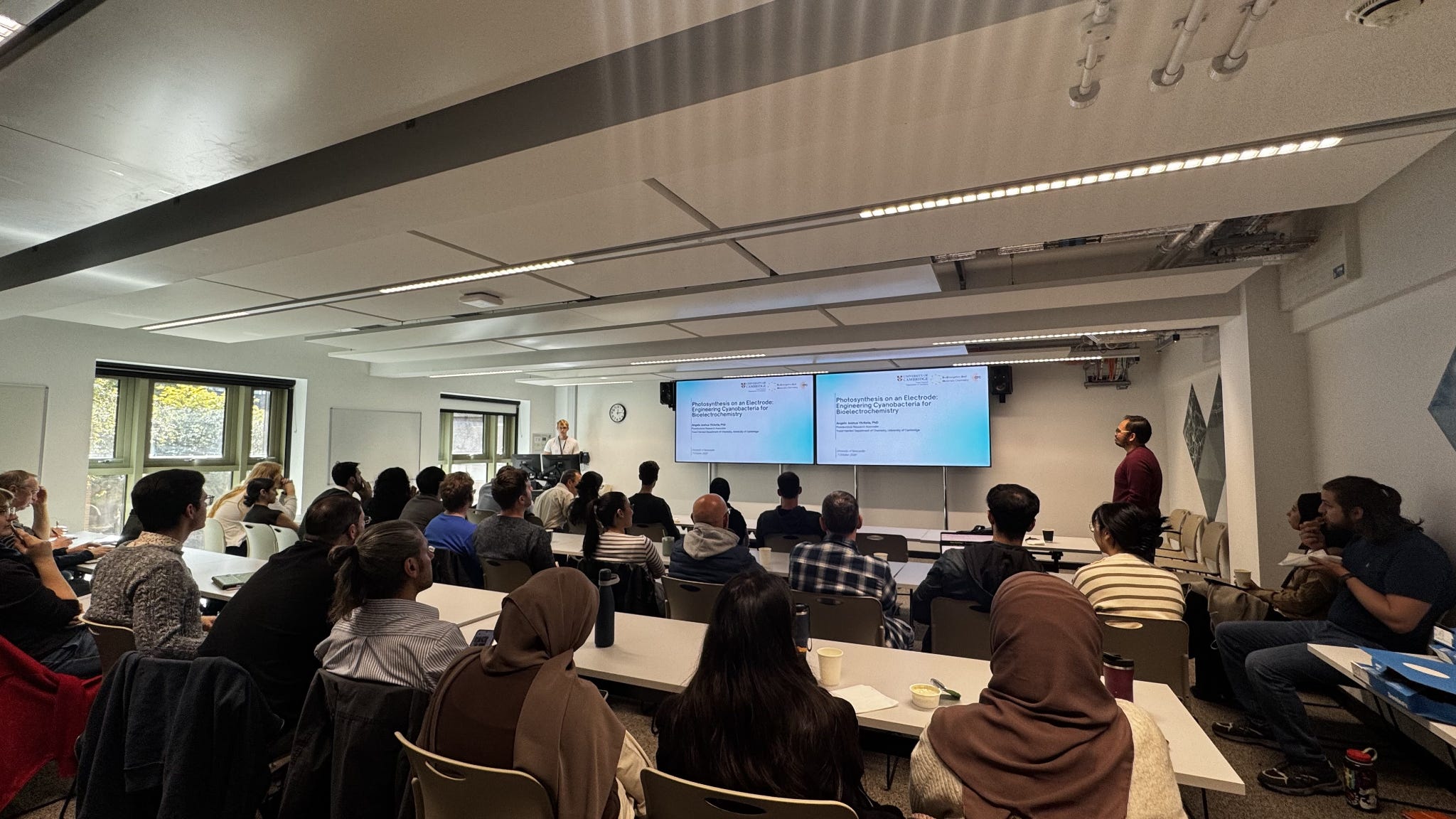
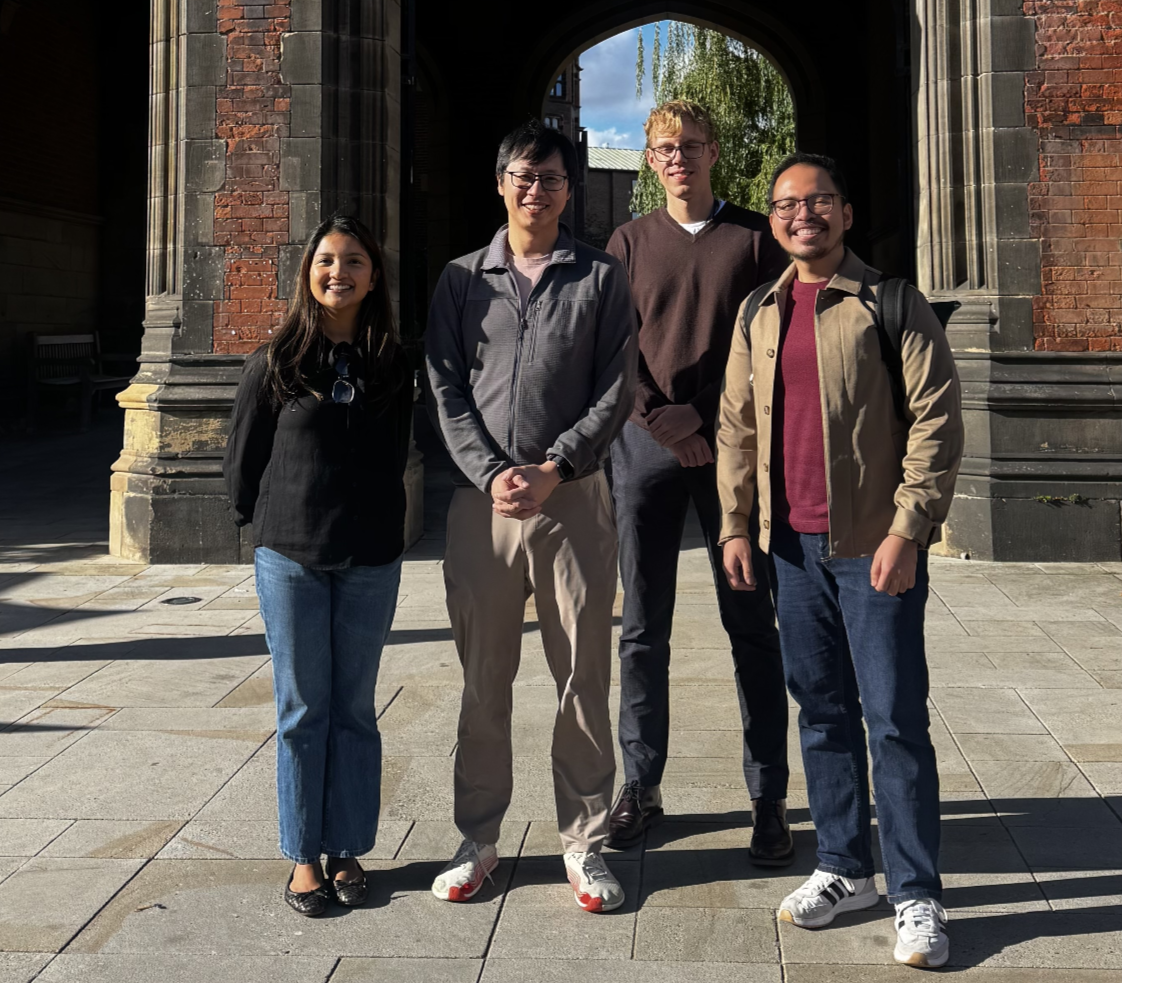
We’re also happy to share that we sponsored our first multi-session Scout-led series - the North East UK Synthetic Biology Seminar Series, organized by Juniper Scout Leela Ghimire with the NEUK Synthetic Biology Network. The series runs monthly from October through May, cycling between Newcastle, Northumbria, and Durham, drawing attendees across academia and industry in North East UK.
Do drop by the next event in the Series on Nov 6th at Grey College, Durham University if you are in the area. Registration: link here